Stationary Targets Required
Demonstrated Fragility
By relying on the fragile extremes of either opaque, high-level deep neural networks or simplistic, low-level aggregate corner tracking, existing solutions fail to deliver both the intelligence and structural robustness required for critical operations.
Unstable, Moving Decks
Unstable, Moving Decks
Ocean platforms introduce multi-axis motions—pitch, roll, yaw, heave, and sway—creating an unstable and unpredictably tilting landing surface that traditional methods aren’t built to handle.
Sensor and Visibility Constraints
Prior Access Required
Most drone landing systems rely on cooperation for their intended landing area, making them impractical for dynamic targets, like a moving vessel.
Environmental Factors
Environmental Factors
Dynamic marine environments, characterized by wind, waves, water glare, and GPS drift, disrupt standard visual sensors during descent, causing autonomous landing systems to fail and leading to missed landings or crashes.
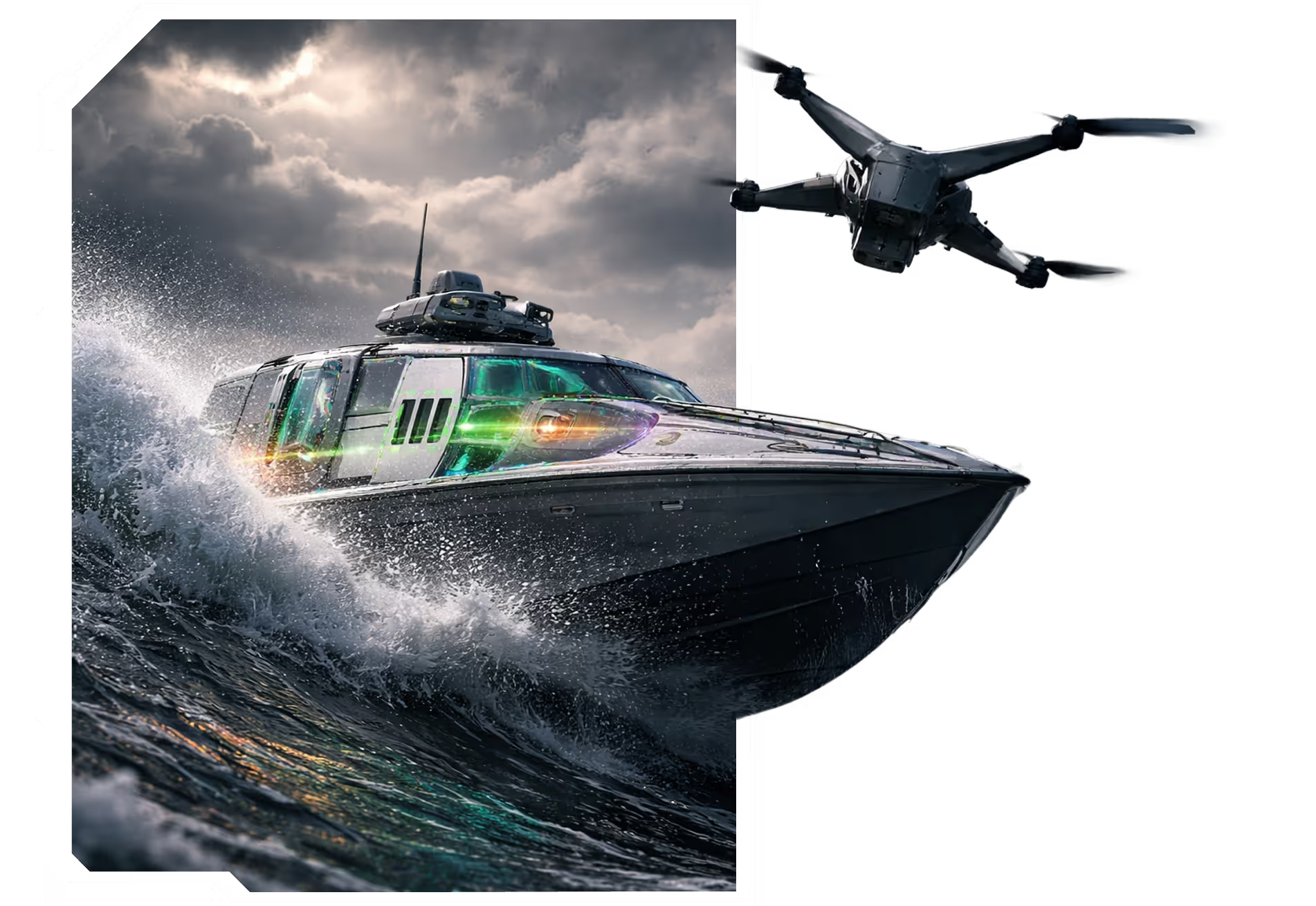
The MACLUV (Modular Autonomous Capability for Landing on Uncooperative Vehicles) system is designed to solve the problem of autonomous precision landing on non-cooperative targets, such as moving ocean vessels, in challenging conditions.
MACLUV
By enabling drones to land reliably in dynamic and unpredictable environments, MACLUV creates possibilities that were previously impossible:
Rapidly deploy and recover mission-critical assets in contested or hard-to-reach environments without requiring pre-staged infrastructure.
Deliver ammunition to FLOT or mission critical equipment to the ship, safely and without manual intervention.
Extend drone delivery services to maritime vessels, moving platforms, and other environments previously inaccessible to traditional UAV landing systems.
Target Identification & Tracking
Mixture of Experts
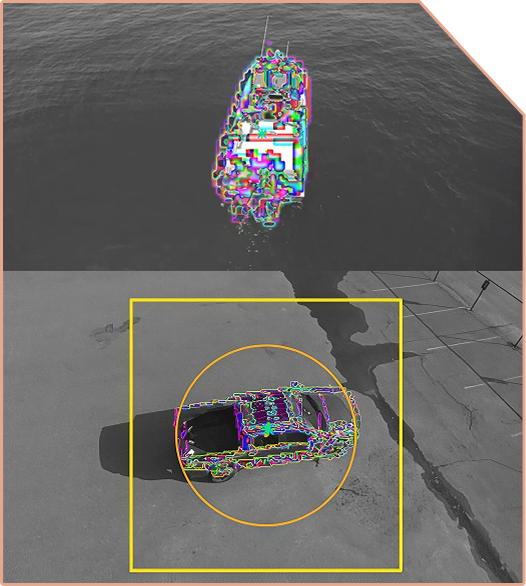
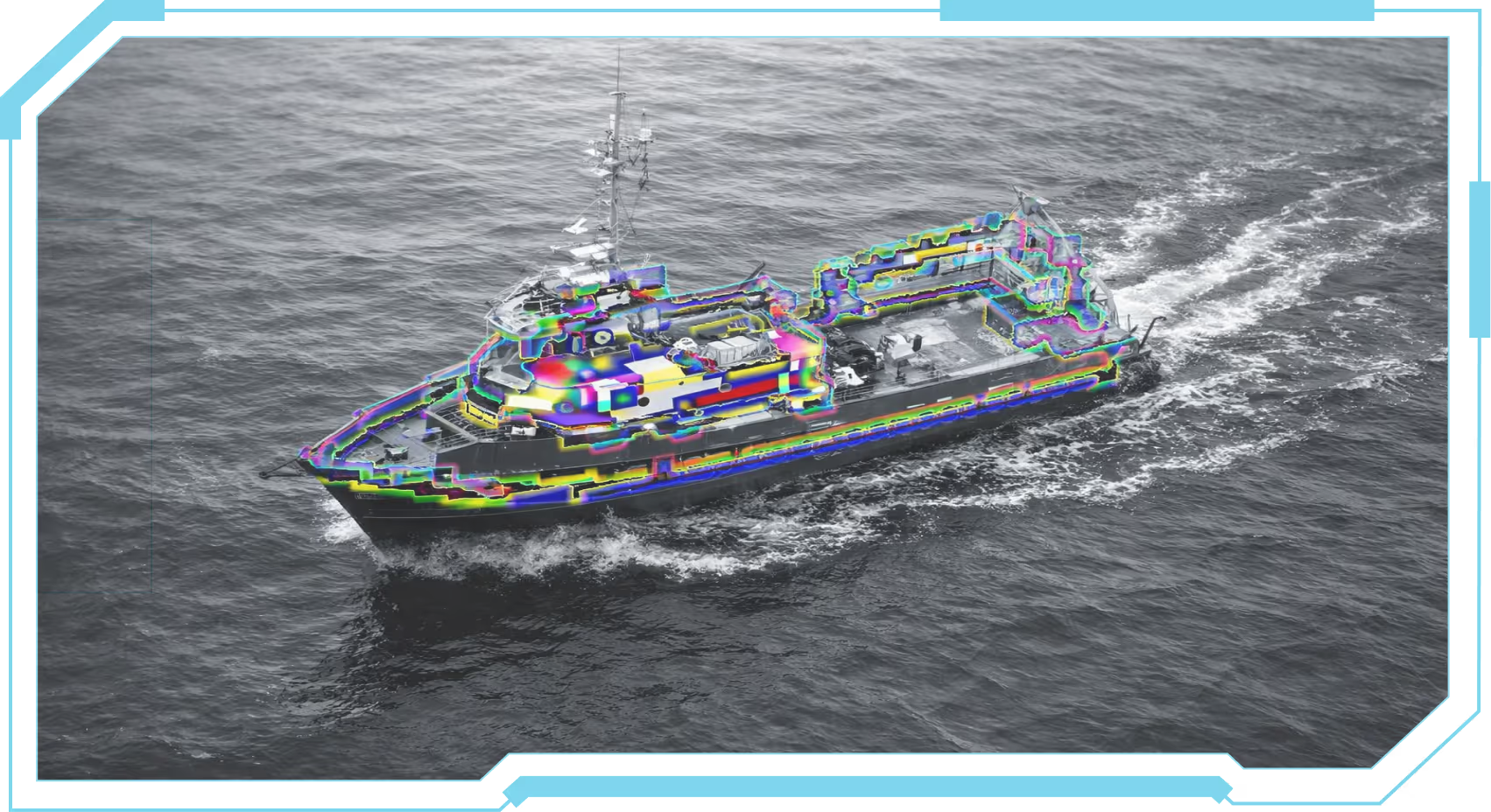
MACLUV fuses AI object discrimination, 3D target templates, and real-time feature tracking, integrating strengths of each algorithm while covering for blind-spots.
Landing Zone Selection
Explainable
Unlike unpredictable "black box" AI systems, MACLUV maps physical, geometric features onto a clear coordinate grid, creating an explainable, step-by-step map of how it makes decisions.
3D Mapping & Navigation
True 3D Spatial Awareness
The system comprehends the target’s geometry allowing it to pinpoint specific components (like a docking port or hatch) and guide highly precise approach paths from exact angles.
Precision Landing
Multimodal
MACLUV can process imagery in both EO and IR, robust across day, night, and different weather conditions.
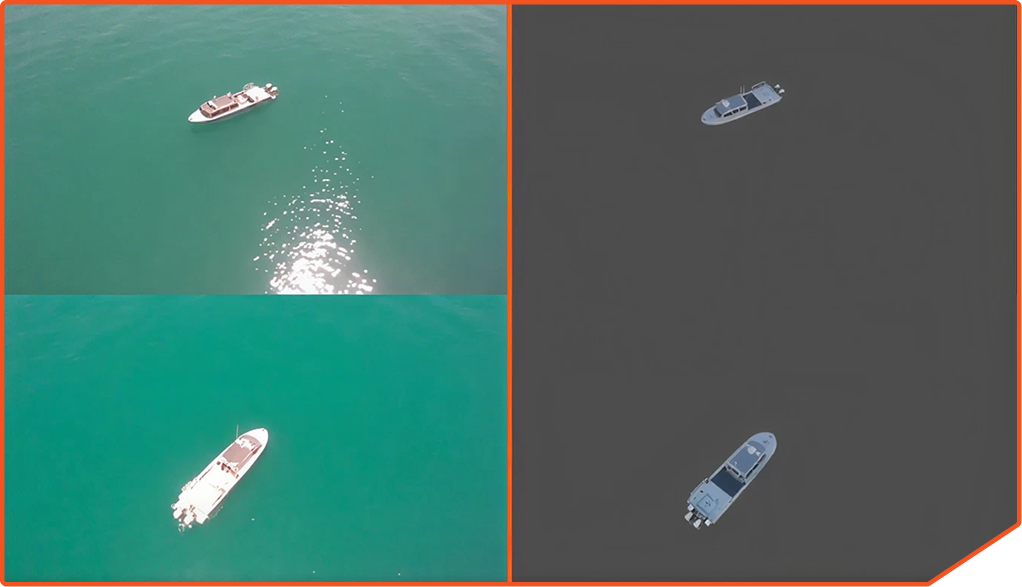
MACLUV has been rigorously tested in real-world operational environments, including:
Trident Spectre – a premier U.S. military exercise for evaluating advanced maritime and autonomous technologies.
Coastal Trident – a leading maritime security and operational experimentation program focused on naval and port defense.

Weather Sensing UAS swarm

Real Object Detection with 3D positioning and awareness in space

Real-time detection and visualization

Attritiable Strike Platform

Long Range One Way Strike Platform

Compact, Deployable Strike Platform
Attritiable Strike Platform

US NDAA compliant flight controller

custom-designed UAS camera payload

modular hybrid electric propulsion system

next-generation generator

Description

Description


